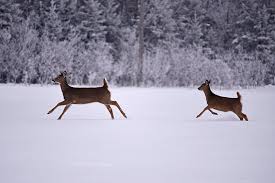
Winter in Maine sharpens the edges of the day. Sunrises come late, sunsets arrive early, and the hours of twilight stretch long across snowy fields and quiet woods. For many animals, these low-light moments—dawn and dusk—are the best time to move. These species are known as crepuscular, and winter is when their twilight habits are most visible.
Why Winter Twilight Matters
Cold temperatures and deep snow make survival more challenging in winter. Moving during the warmer edges of the day helps animals conserve energy, while low light offers protection from predators and human disturbance. With shorter days, dawn and dusk also represent a larger portion of an animal’s active time.
Winter landscapes can feel still, but crepuscular animals are quietly traveling, feeding, and conserving precious calories while most of us are indoors.
Crepuscular Species You’re Likely to See in Winter
Some of Maine’s most iconic winter wildlife depends on twilight hours:
- White-tailed deer conserve energy by bedding down during the coldest parts of the day, then emerging at dawn and dusk to browse on twigs and buds. Wintering areas, or deer yards, provide critical shelter during these movements.
- Moose remain active year-round and are often seen in winter near wetlands or forest openings during low-light hours. Their dark coloring and massive size can make them difficult to spot—one reason dawn and dusk are especially dangerous times for drivers.
- Coyotes take advantage of twilight to hunt and travel across frozen landscapes. Their adaptability allows them to thrive in winter, often using packed snow or human-made corridors to move efficiently.
- Snowshoe hare are perfectly adapted to winter, turning white for camouflage and becoming most active at dusk and dawn as they forage for bark and twigs.
- Red foxes can sometimes be seen trotting across snowy fields at sunset, using their keen hearing to locate prey beneath the snow.
Adapted for the Cold and the Dark
Winter crepuscular animals have impressive adaptations. Thick fur, insulating feathers, and specialized feet help them move through snow, while heightened senses allow them to navigate dim light. Many reduce unnecessary movement to conserve energy, making twilight activity efficient and purposeful.
How We Can Help in Winter
Human activity can have an outsized impact during winter. Disturbing animals forces them to burn valuable energy reserves. Staying on trails, keeping dogs leashed, and avoiding wildlife wintering areas are simple ways to help. Slowing down on roads at dawn and dusk is especially important, when animals are hardest to see.
Protected open spaces play a critical role in winter survival, offering safe corridors and undisturbed habitat during the most challenging months of the year.
A Season of Subtle Wildlife
Winter may seem quiet, but life persists in the margins of light. The next time you’re outside at sunrise or sunset, watch the snowy edges of fields and forests. You may glimpse the crepuscular wildlife that endures Maine’s winter—not by fighting the cold, but by moving thoughtfully between day and night.