The Cape Elizabeth Land Trust and Scarborough Land Trust were awarded this past summer the Cornell Lab of Ornithology’s Land Trust Bird Conservation Initiative grant! As part of that grant, we committed to restore habitat for birds that depend on shrubland and young forests, specifically across preserves adjoining the Spurwink Marsh.
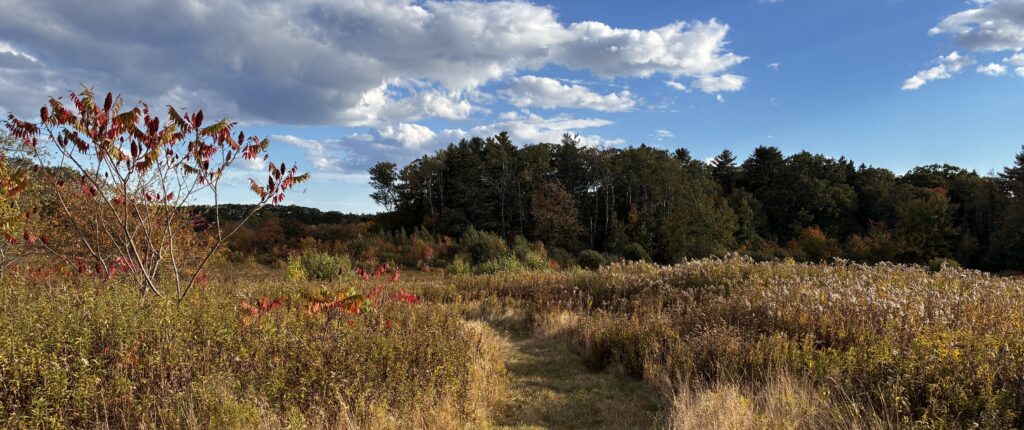
CELT began our efforts in August. We collected baseline data on bird population activity at Runaway Farm, and entered the observations into eBird.
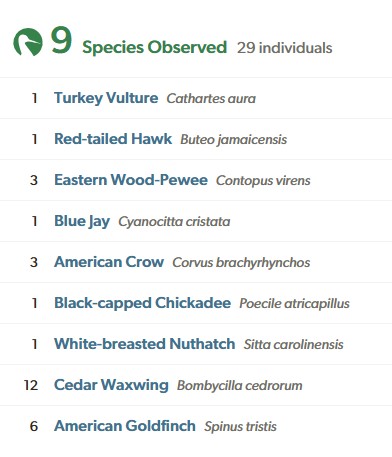
Baseline data is notes recorded at the start of a project, before any management efforts take place. That way, we can compare it with similar information recorded at the end of the project and quantify any changes. We plan to go for a similar walk next year to learn if bird activity in the fields has increased in line with our efforts.
In addition to visual observations recorded with eBird, we also recorded audio to learn about the bird activity onsite. We installed a recorder mid-September to note bird calls during 15 minutes on the hour, every hour, over multiple days. This BirdNET recorder noted 31 species over 11 days. The top three most popular calls were from the blue jay, the Canada goose, and the American crow.
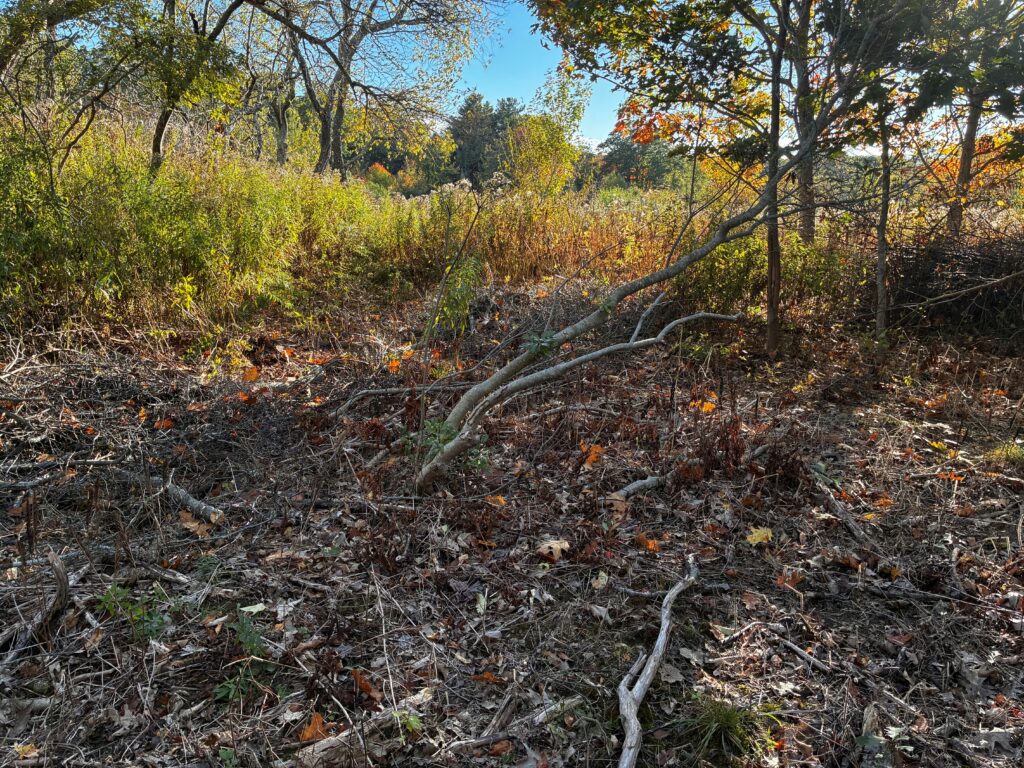
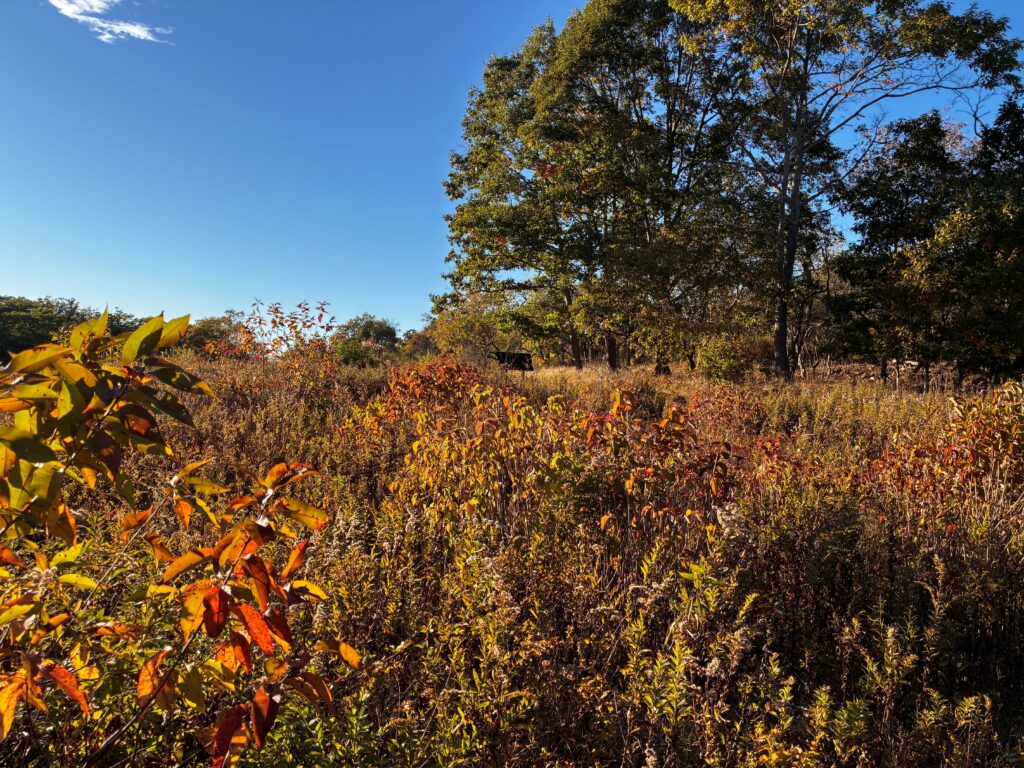
The second step for restoring habitat for early successional bird species was to reduce the distribution of disruptive, introduced plants onsite. Over two days mid-September, professional contractors targeted multiflora rose, round leaf bittersweet, bush honeysuckles, buckthorn privet, and autumn olive, in particular. They reduced the dominance of several invasive species in the fields, benefiting the health of the native vegetation and working to achieve a more inviting environment.
Once many of the aggressive, introduced plants had been removed from the fields, the ground was ready for new native grassland plantings to promote a more healthy, biodiverse ecosystem and encourage bird habitat.
CELT and our nonprofit native seed growing partner Wild Seed Project coordinated two mid-October planting days, where 25 participants planted 32 different native species of wildflowers, grasses, shrubs, and trees, with 572 plantings in total.
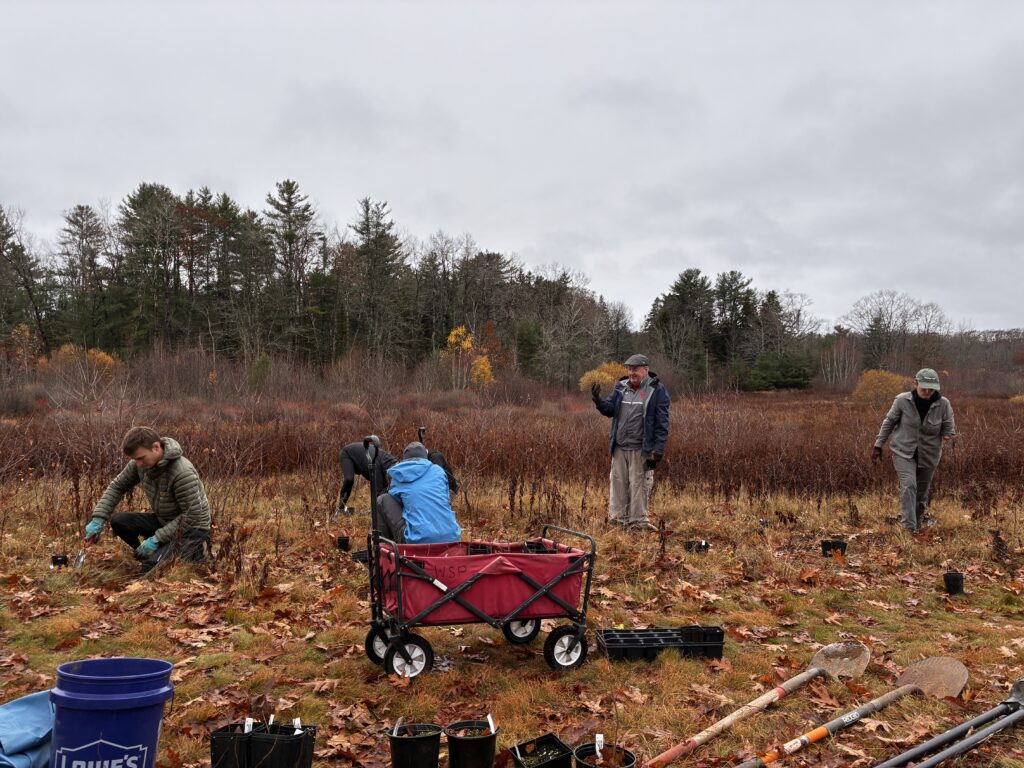
Many thanks to the volunteers and contractors for helping with the project so far this season, and to the Cornell Lab of Ornithology for enabling it to take shape.
If you’d like to learn more about the bird activity in the fields at Runaway Farm, come join an upcoming nature walk! There will be a guided walk on Saturday, January 9, as well as several more throughout spring and summer 2027.